Free postal entry, explained
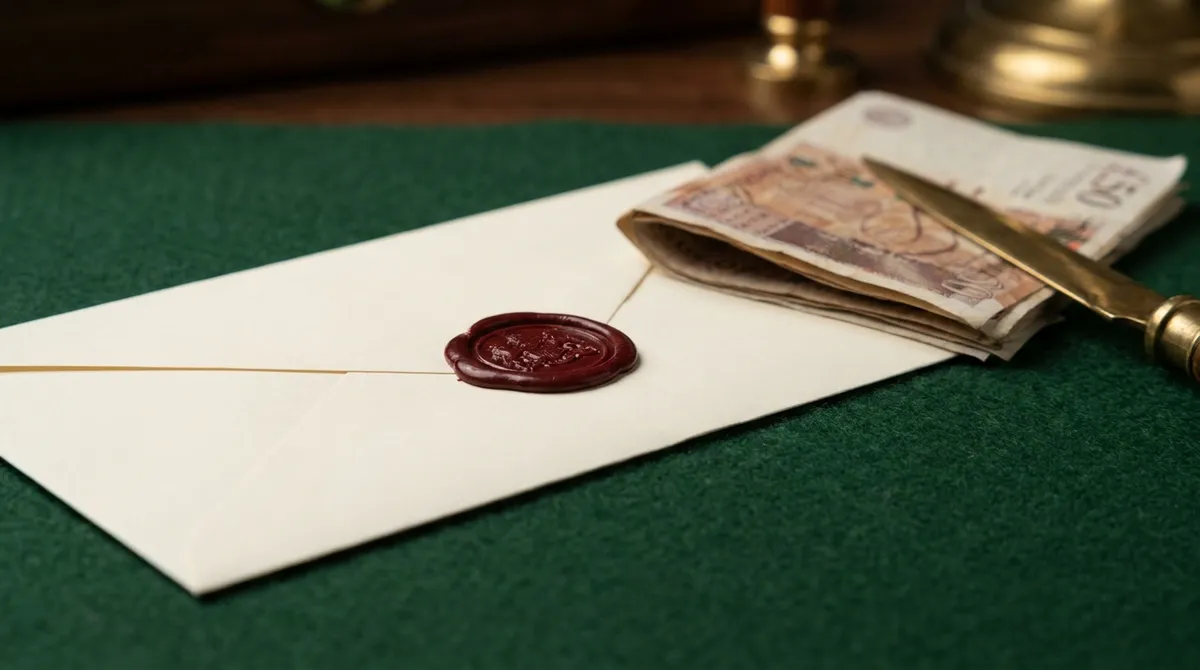
A free postal entry lets you enter a prize draw without paying, by posting your details and your answer to the skill question. Where a competition relies on it to stay outside lottery law, the Gambling Act 2005 requires that entering by ordinary post is a genuine choice, clearly publicised, with prizes allocated no differently from paid entries. At Grand Draws a valid postal entry counts as one ticket, goes into the same draw and has exactly the same chance of winning. The only cost is the stamp.
How it works at Grand Draws
The steps are simple on purpose, because the route has to be genuinely usable. The full rules are on our free entry page; in short:
- Write your full name, date of birth, address, email and a contact number on a postcard.
- Add the exact name of the competition you're entering, your answer to its skill question, and a statement that you're 18 or over and resident in Great Britain.
- Send it by first or second class post to the free entry address, in time to arrive before entries close. Proof of posting isn't proof of receipt.
- Each valid postcard is one entry, equal to one paid ticket, and goes into the same draw on the same odds as everyone else's.
Why sites offer it at all
Not out of generosity. For a paid draw where chance decides the winner, a free route of equal standing is what stops it being a lottery under the Gambling Act 2005. The Act sets the conditions: you can choose to enter by a letter sent by ordinary post, or another way that is no dearer and no less convenient than paying; the choice is publicised so you're likely to see it; and prizes are allocated without distinguishing free entrants from paying ones.
Promoting a lottery outside the law is an offence under section 258 of the Act, so the operator needs a working free route more than you do. It's reasonable to expect it to be easy to find.
What a good free route looks like
The most common failing in this market is a free route that exists on paper but not in practice. A good one avoids all of these:
- Odds that quietly differ from paid entry.
- An entry window that opens later or closes earlier than the paid one.
- A cap on free entries while paid entries run uncapped.
- An address buried so deep in the terms that finding it becomes the obstacle.
Sources
- Gambling Act 2005, Schedule 2, paragraph 8: choice of free entry (legislation.gov.uk)
- Gambling Act 2005, section 14: meaning of "lottery" (legislation.gov.uk)
- Gambling Act 2005, section 258: promotion of lottery (legislation.gov.uk)
- Gambling Commission: Free draws and prize competitions
- CAP Code, section 8: promotional marketing (ASA)
Checked against these sources on .
Common questions
Is a postal entry really as likely to win?
Yes. At Grand Draws each valid postcard counts as one ticket in the same draw, with exactly the same chance as a paid ticket. The law requires prizes to be allocated without distinguishing between the two.
How many free entries can I submit?
One entry per postcard, each posted separately. You can send as many as the per-person limit for that competition allows, which is the same limit that applies to paid entries. Bulk entries in a single envelope may be rejected.
Do I still have to answer the skill question?
Yes. The skill question applies to every entrant, and a wrong answer disqualifies a postal entry exactly as it would a paid one.